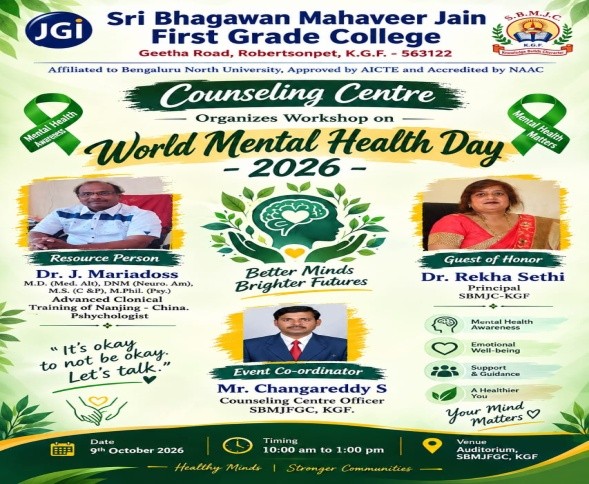
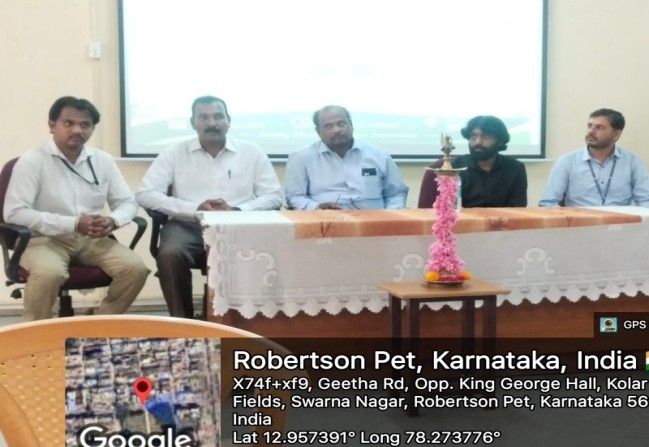
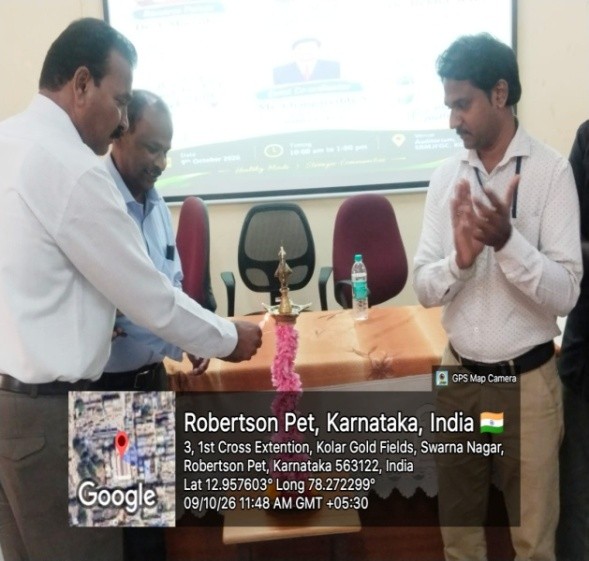
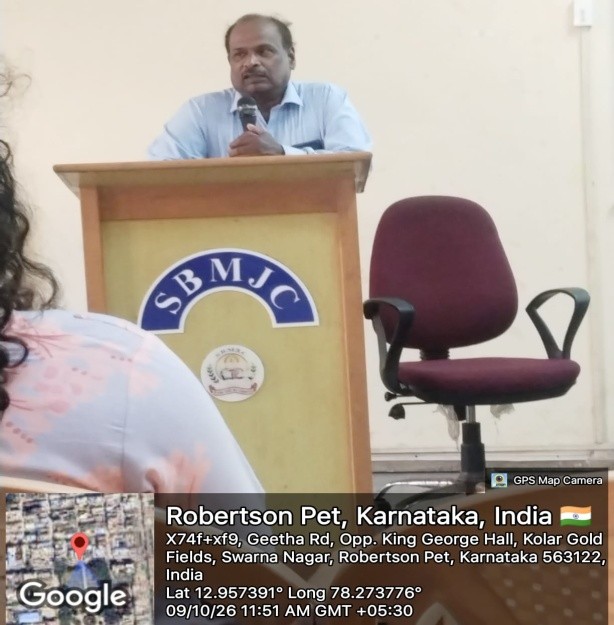
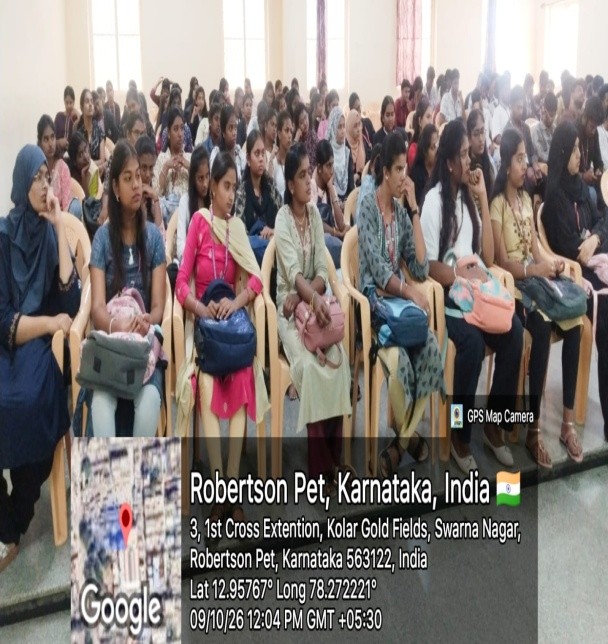
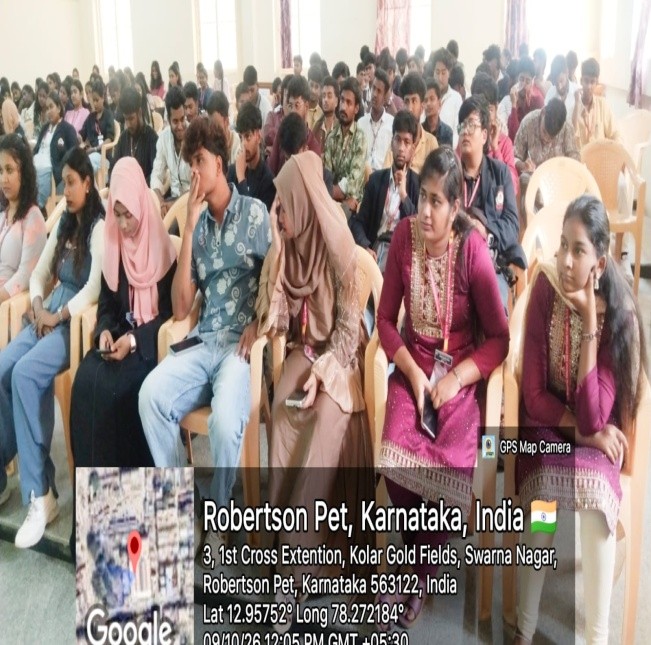
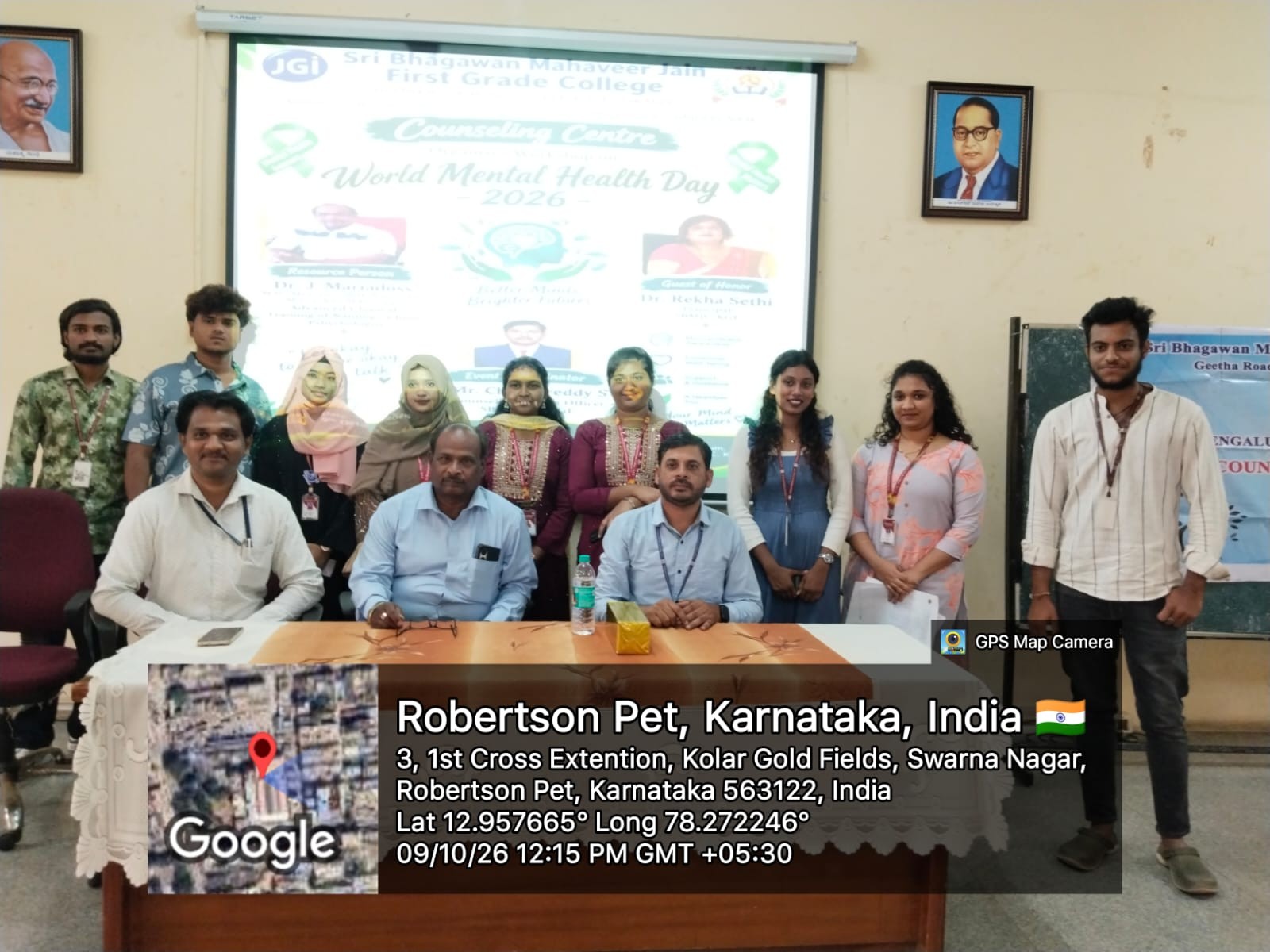
Counselling Centre observed that “World Mental Health Day for degree students on 09th October 2026 at 10.00 A M to 0:05 P M in the Auditorium.
Prof. Dr. J. Mariadoss Psychologist, delivered On Mental Health, Dr. Rekha Sethi Principal, SBMJC, KGF Office Superintendent Mr. Babu SBMJC, KGF Mr. Praveen SWC Officer and Faculty Members were present.
Meaning of Mental Health: Mental health is a Multidimensional concept that refers to a human individual’s emotional and psychological well-being. It is the ability to respond to the many varies experiences of life with flexibility. It is the science that deals with human welfare and all fields of human relationship. It is the ability to make whole personal and social adjustment. It is a state of emotional, psychological and social wellbeing that affects how we think, feel and act.
Objectives of Mental Health: 1. To provide mental health care facility to every individual of specified population and specifically to those who are in need of it. 2. To ensure the availability and accessibility of minimum mental healthcare for all in the foreseeable future. 3. To encourage the application of mental health knowledge in general health care and in social development. 4. To advance community participation in the mental health service development. 5. To enhance human resources in mental health subspecialties.
Outcomes of Mental Health:-
Gain awareness and understanding of the definition of mental disorder contained within the MHA
Understand the criteria for detention and appropriate treatment as defined in the MHA
Be able to apply the Guiding Principles in relation to appropriate treatment
Understand how the age appropriate admission criteria will work
Total number of students 138 and 05 Faculty Members participated.
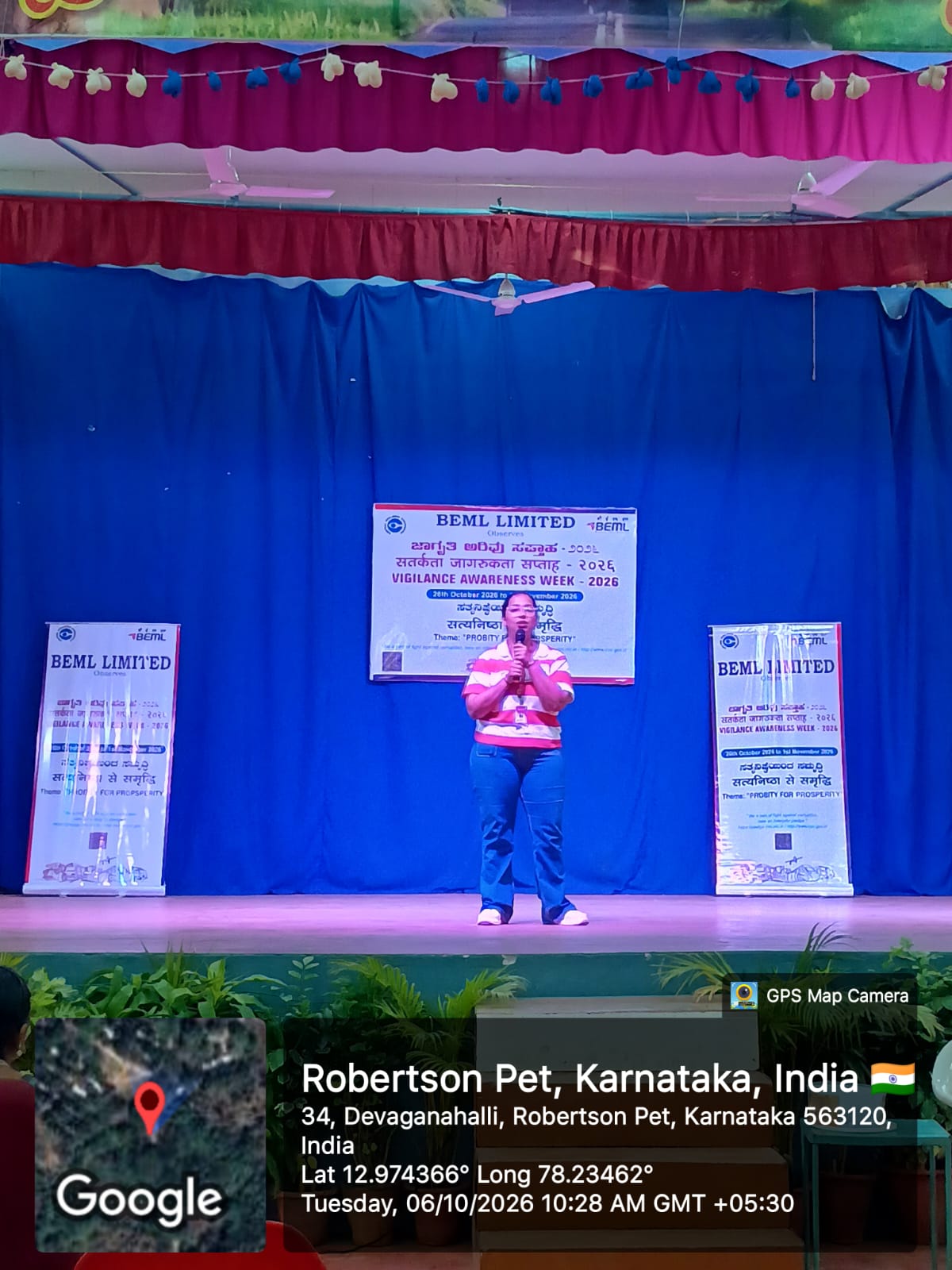
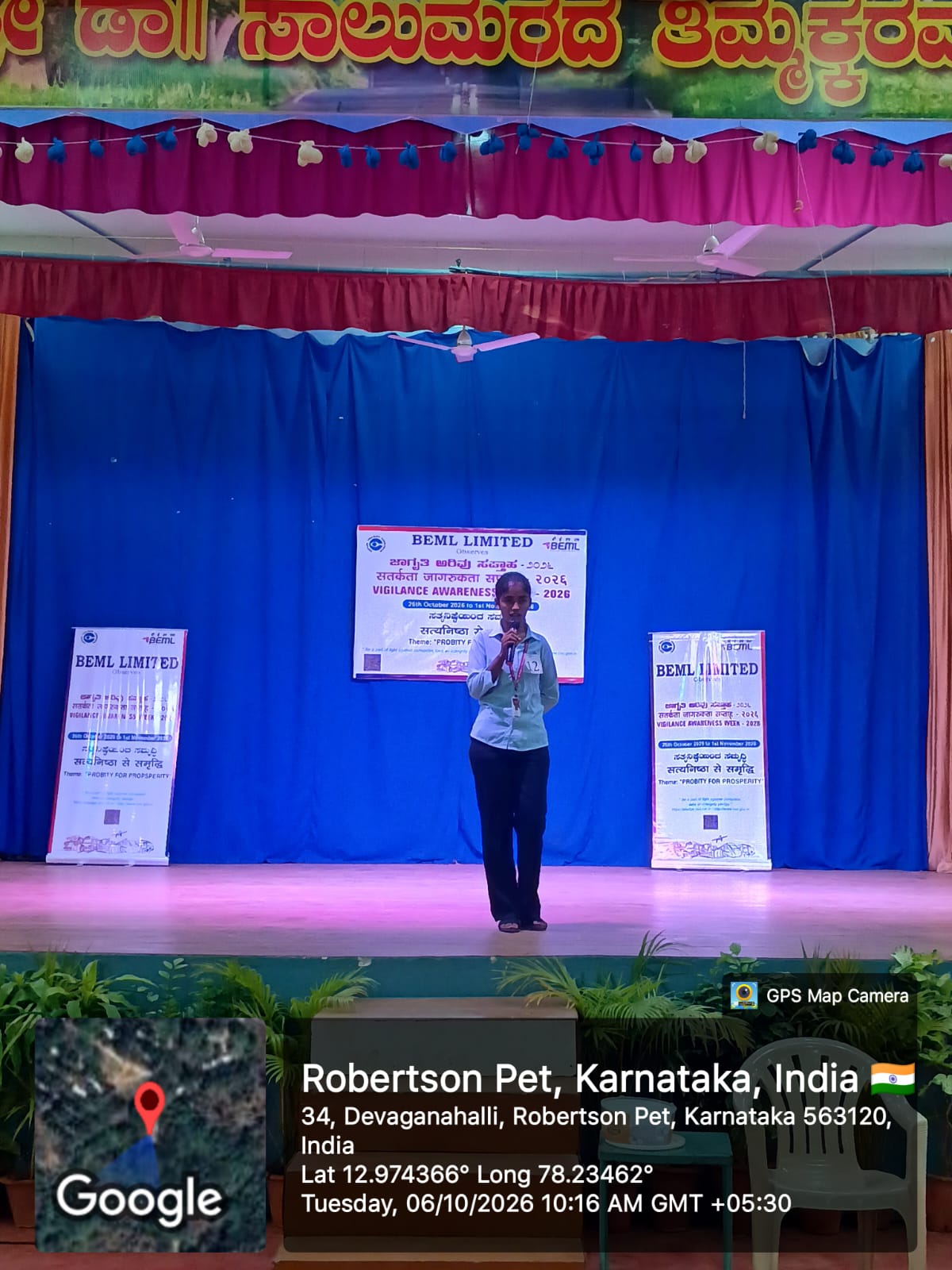
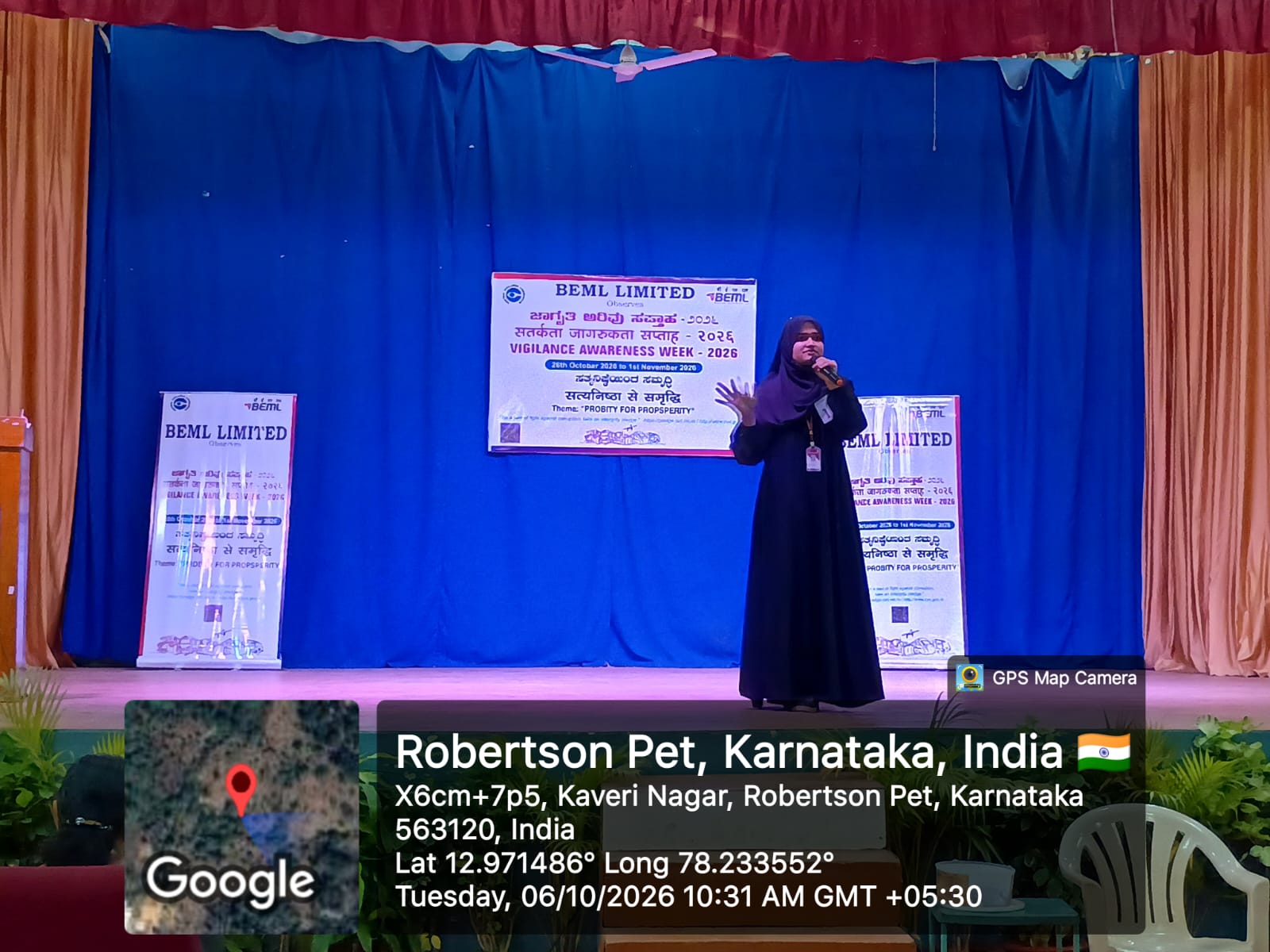
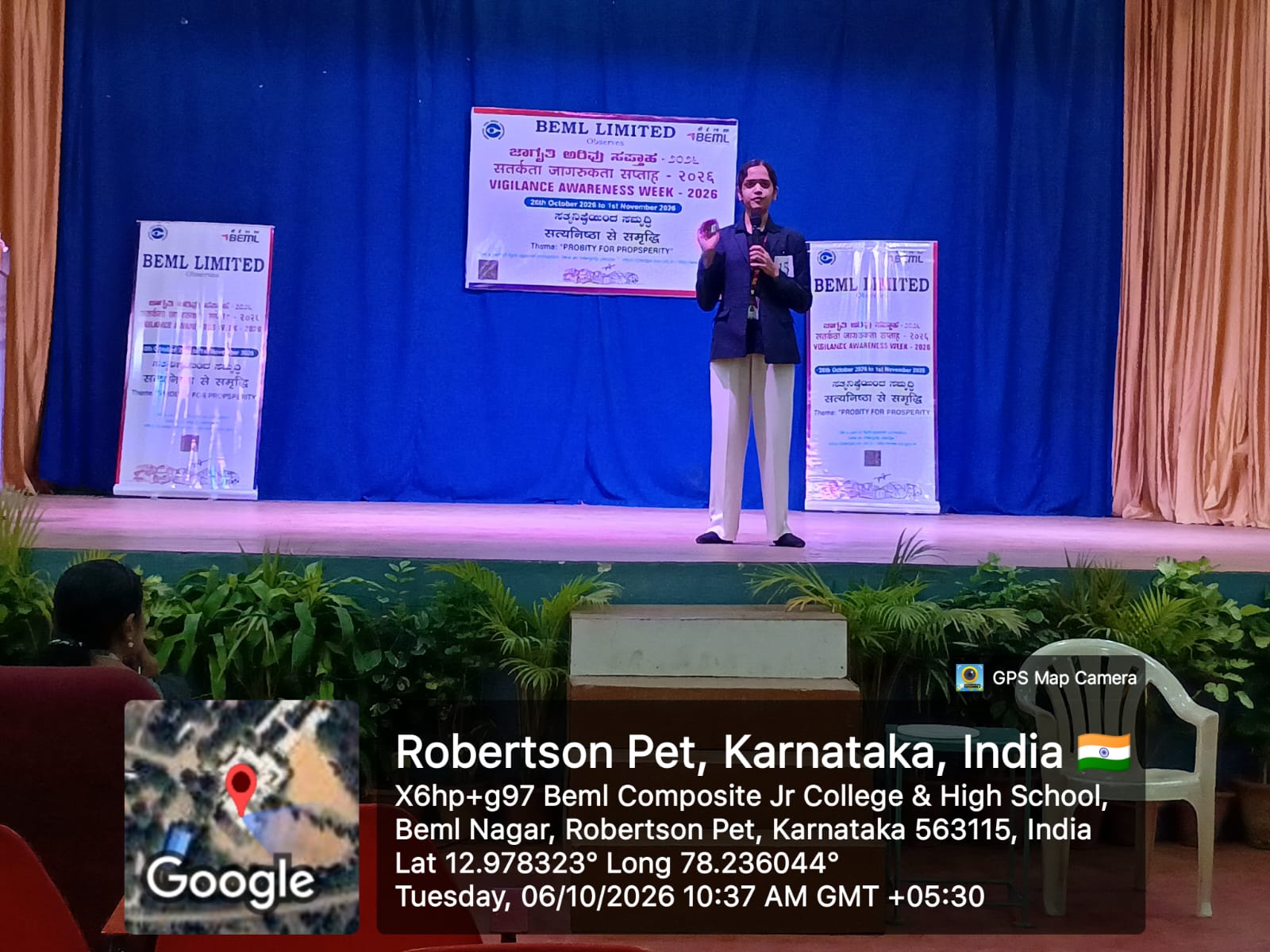
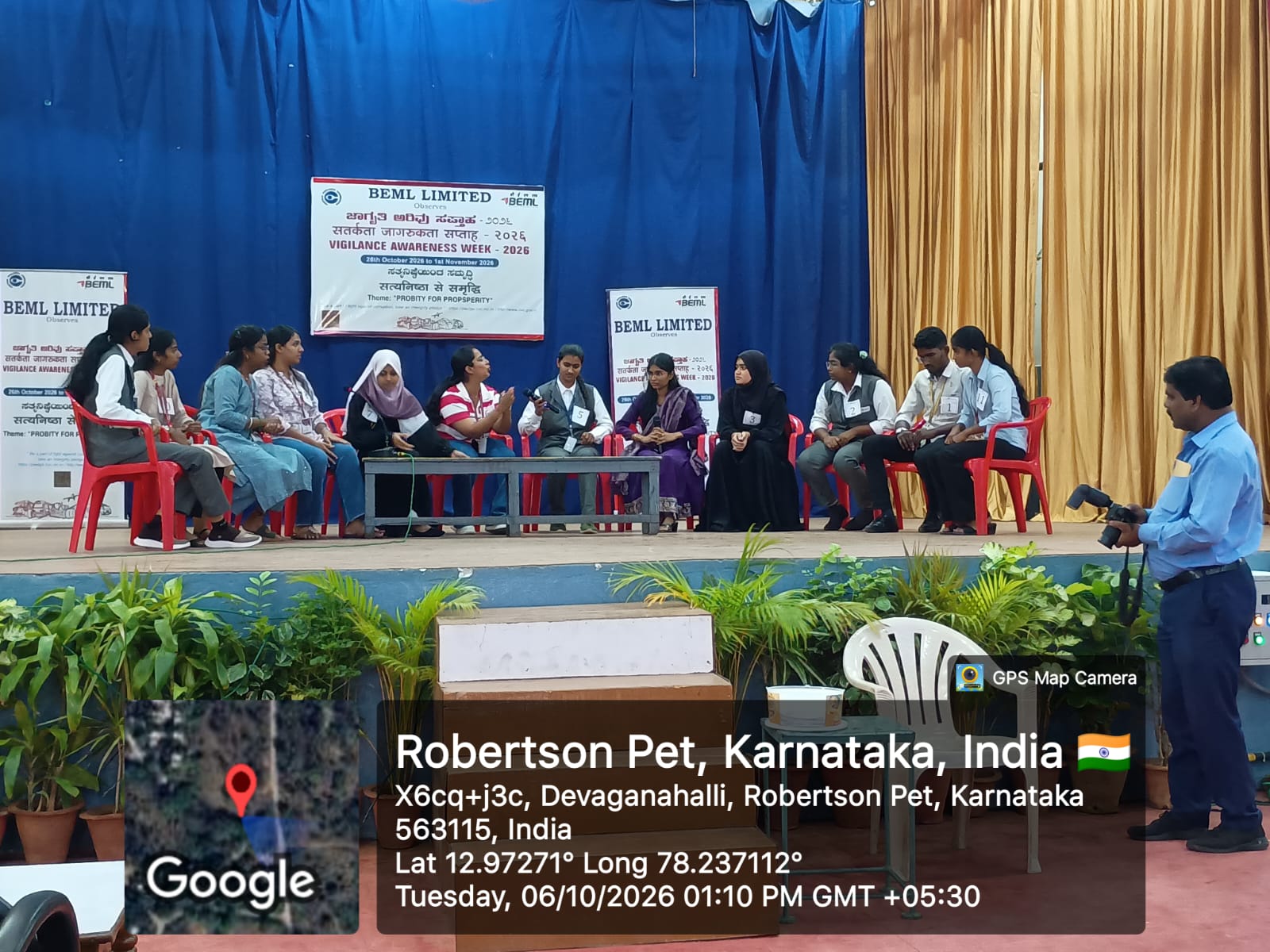
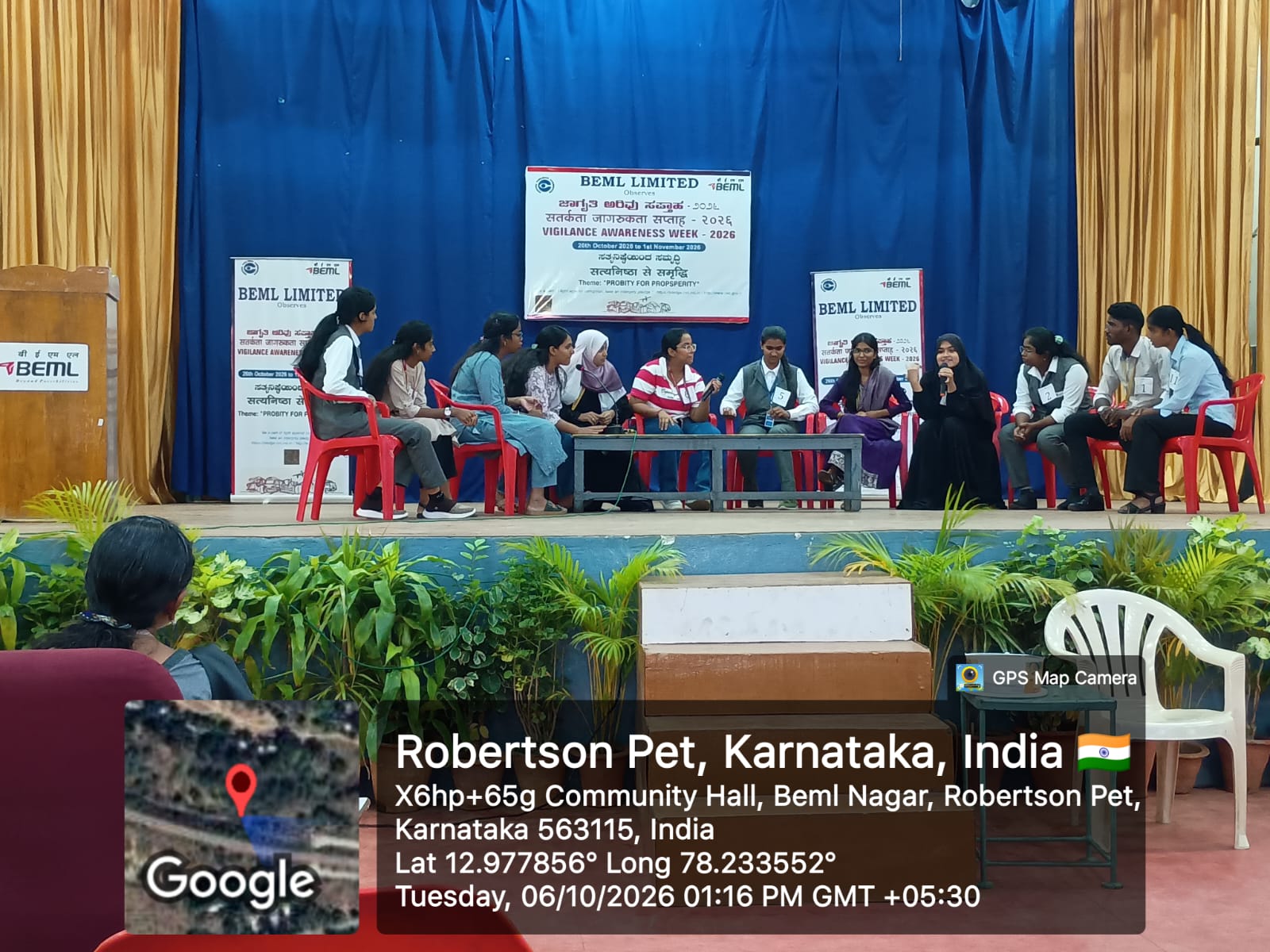
The students of SBMJFGC, KGF, participated in the Extempore and Group Discussion competitions conducted by BEML Ltd., KGF, on 6th October 2026 as part of the observance of Vigilance Awareness Week 2026, based on the theme “Probity for Prosperity.”
A total of seven students participated enthusiastically in the events and demonstrated their communication, confidence, critical-thinking, and public-speaking skills. The competitions provided the students with a valuable platform to express their views on issues related to integrity, ethics, accountability, and the responsibilities of youth in society.
The event helped students understand the importance of probity, transparency, and ethical values in building a responsible and progressive society. Their participation also encouraged them to develop a greater sense of social responsibility and uphold integrity in their personal and academic career.
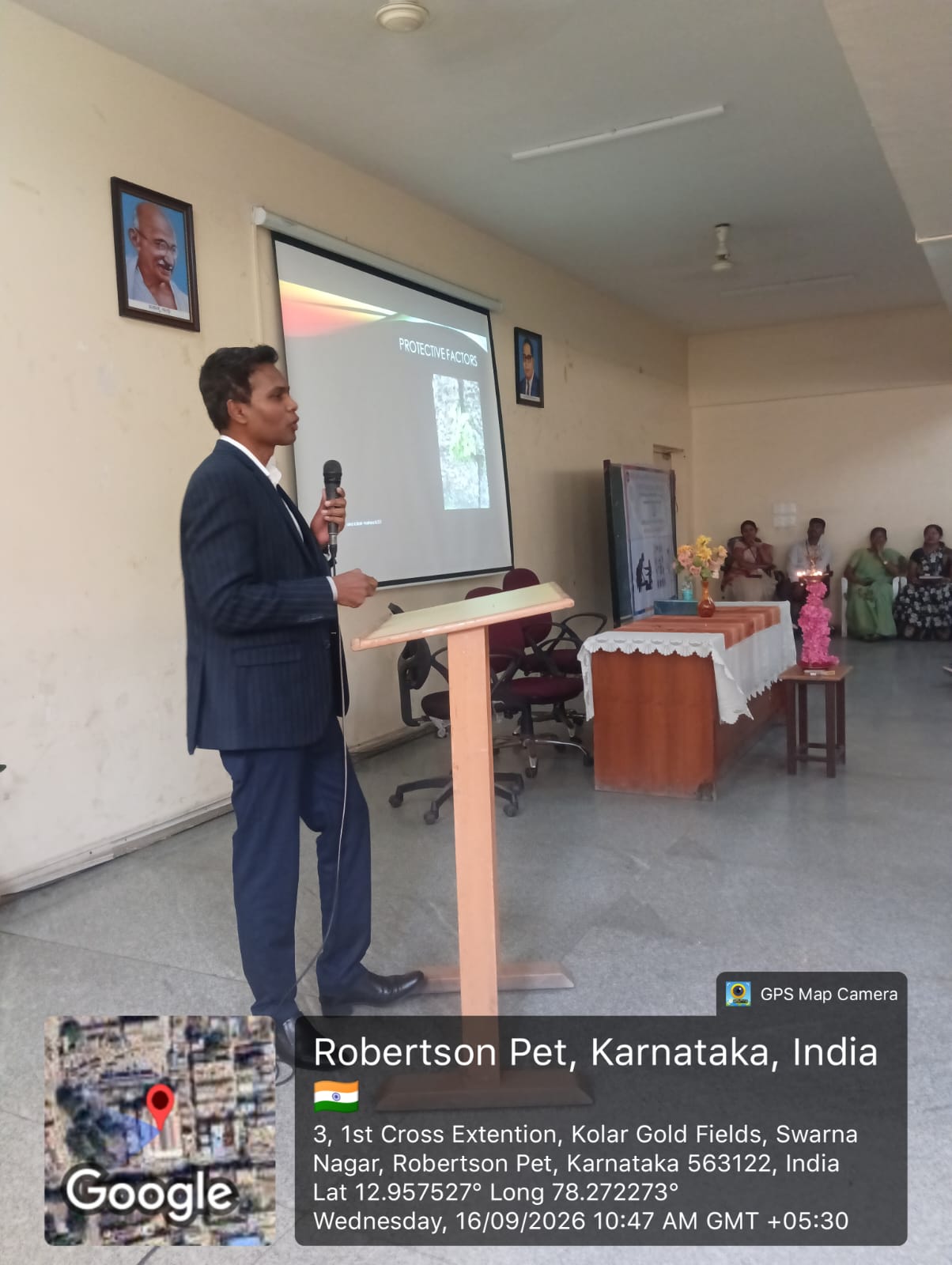
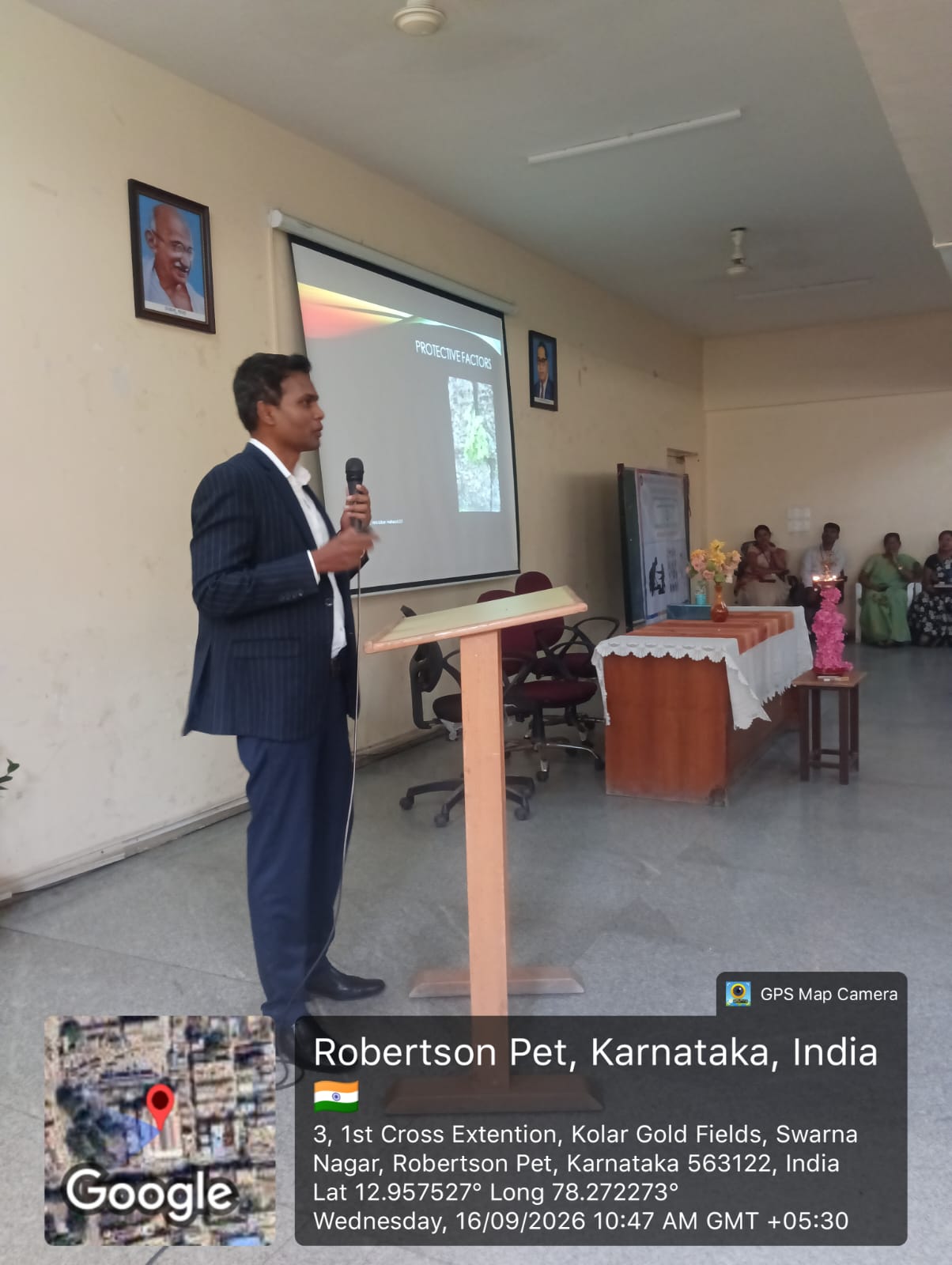
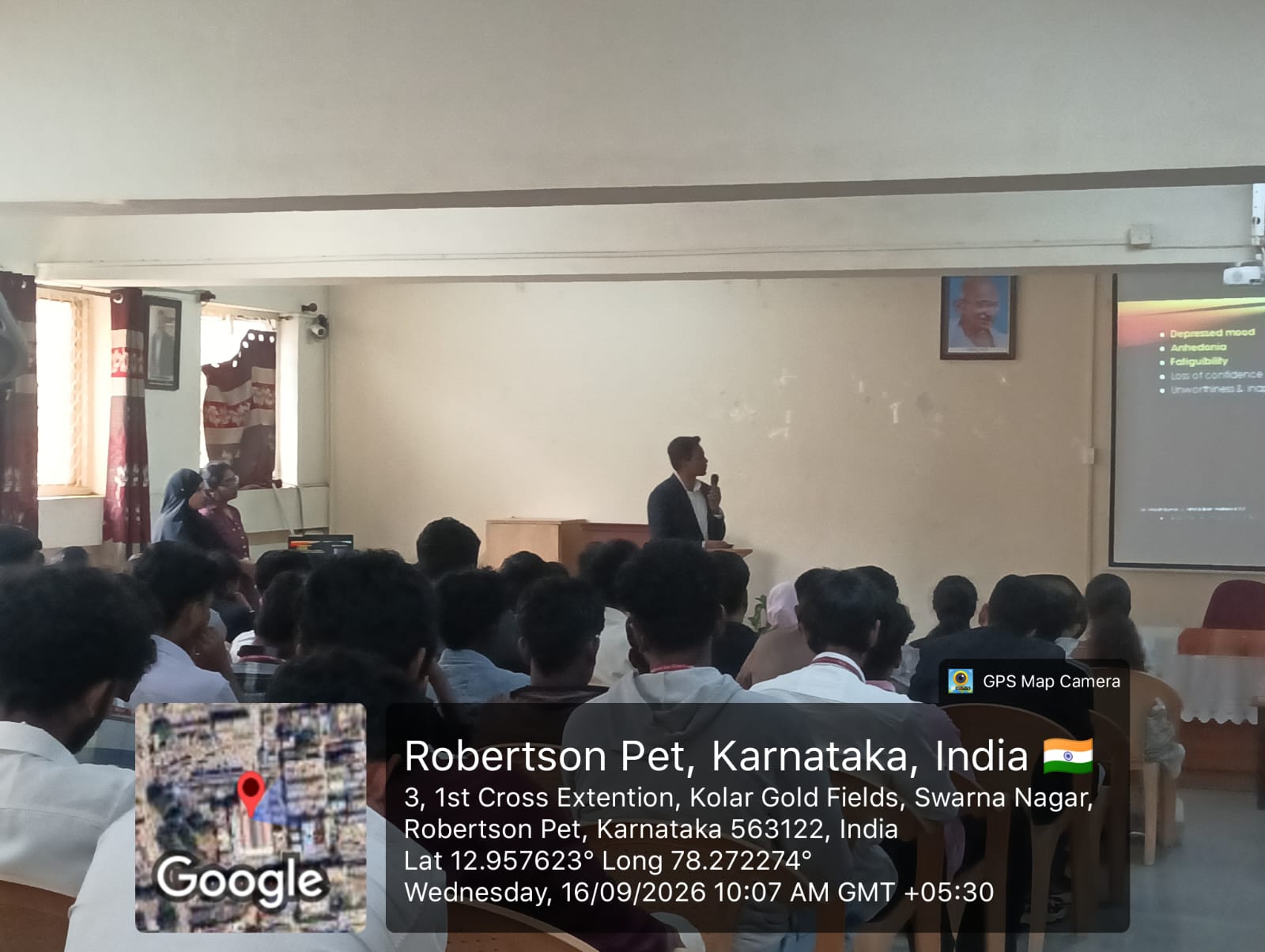
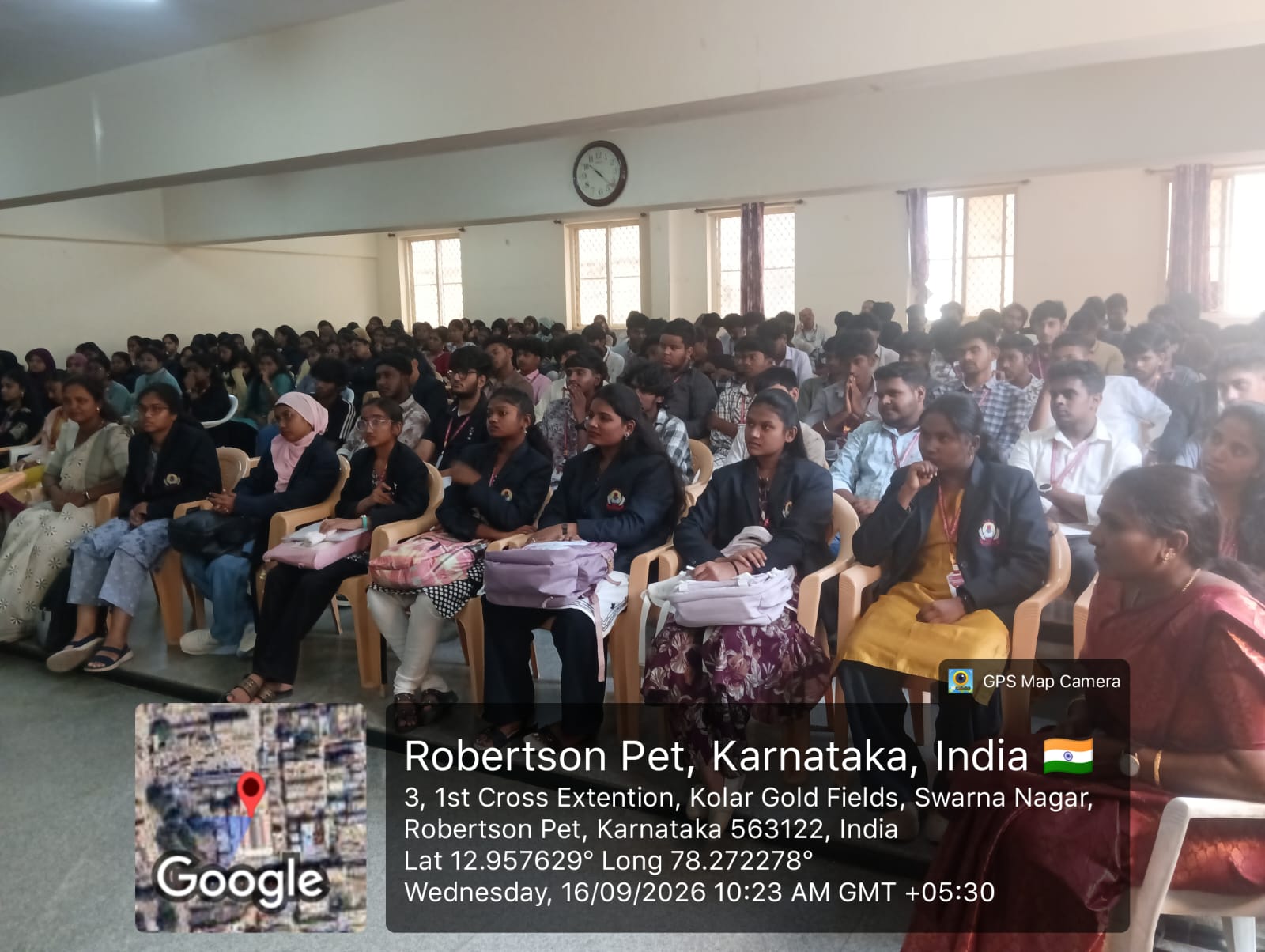
The Anti-Sexual Harassment Cell organised a Guest Talk and Awareness Programme on 16 September 2026 in the college auditorium on the theme “Breaking the Silence.” The programme aimed to create awareness among students about sexual harassment, depression, stress, emotional well-being, and the importance of seeking timely help and support.
The programme commenced with a lamp-lighting ceremony, followed by a welcome address by the Student Coordinator, Ms. Sakeena, who warmly welcomed the gathering.
The Faculty Coordinator, Harshini K J, briefed the students about the purpose of organising the awareness programme. She also created awareness about the Anti-Sexual Harassment Cell, its objectives and functions, and explained how the Cell works towards maintaining a safe, respectful and supportive campus environment.
The Faculty Coordinator further sensitised the students about the dos and don’ts on campus, appropriate and respectful behaviour, maintaining professional boundaries, and the importance of treating fellow students and staff with dignity and respect. Students were encouraged to understand their responsibilities and maintain appropriate conduct within the college premises.
The Chief Guest, Dr. Vinod Kumar, Professor and Head of the Department of Psychiatry, CIMER, KGF, and Senior Psychiatrist at Mind and Brain Wellness Hospital, KGF, addressed the students and shared valuable insights on depression, stress and emotional well-being among young people.
Dr. Vinod Kumar explained the importance of recognising emotional difficulties at an early stage and encouraged students to communicate their concerns with trusted individuals and seek professional assistance whenever necessary. He also emphasised the importance of supporting friends and peers who may be experiencing emotional challenges.
The students were also made aware of mental-health support services and crisis helplines, including Tele-MANAS, and were encouraged to make use of appropriate professional support whenever required.
More than 150 students, along with faculty members from various departments and non-teaching staff, actively participated in the programme. The participants showed keen interest throughout the session and positively acknowledged the importance of the awareness programme and the valuable information shared by the resource person.
The session was informative, engaging and meaningful. It helped students gain a better understanding of mental health, sexual-harassment awareness, responsible campus behaviour and the support systems available to them. The programme encouraged students to communicate openly, respect one another and contribute towards creating a safe and positive campus environment.
The programme concluded with the message of “Breaking the Silence,” encouraging students to speak up, seek help when needed, respect others and support one another.
Date: 29/09/2026Day: Tuesday Time: 11.30 am to 1.30 pm
Event Organizer: Mr. Praveen N, SWC Officer, Mr. Changareddy, SWC coordinator
Venue: Auditorium
Guest: 1. Dr.Rekha Sethi, Principal SBMJFGC-KGF 2. Mrs. Rashmi, Administrative Department SBMJFGC-KGF 3. Mr. Md Younus former SWC , President (2022-2023) 4. Ms. Abhinaya, former SWC , President (2025-2026)
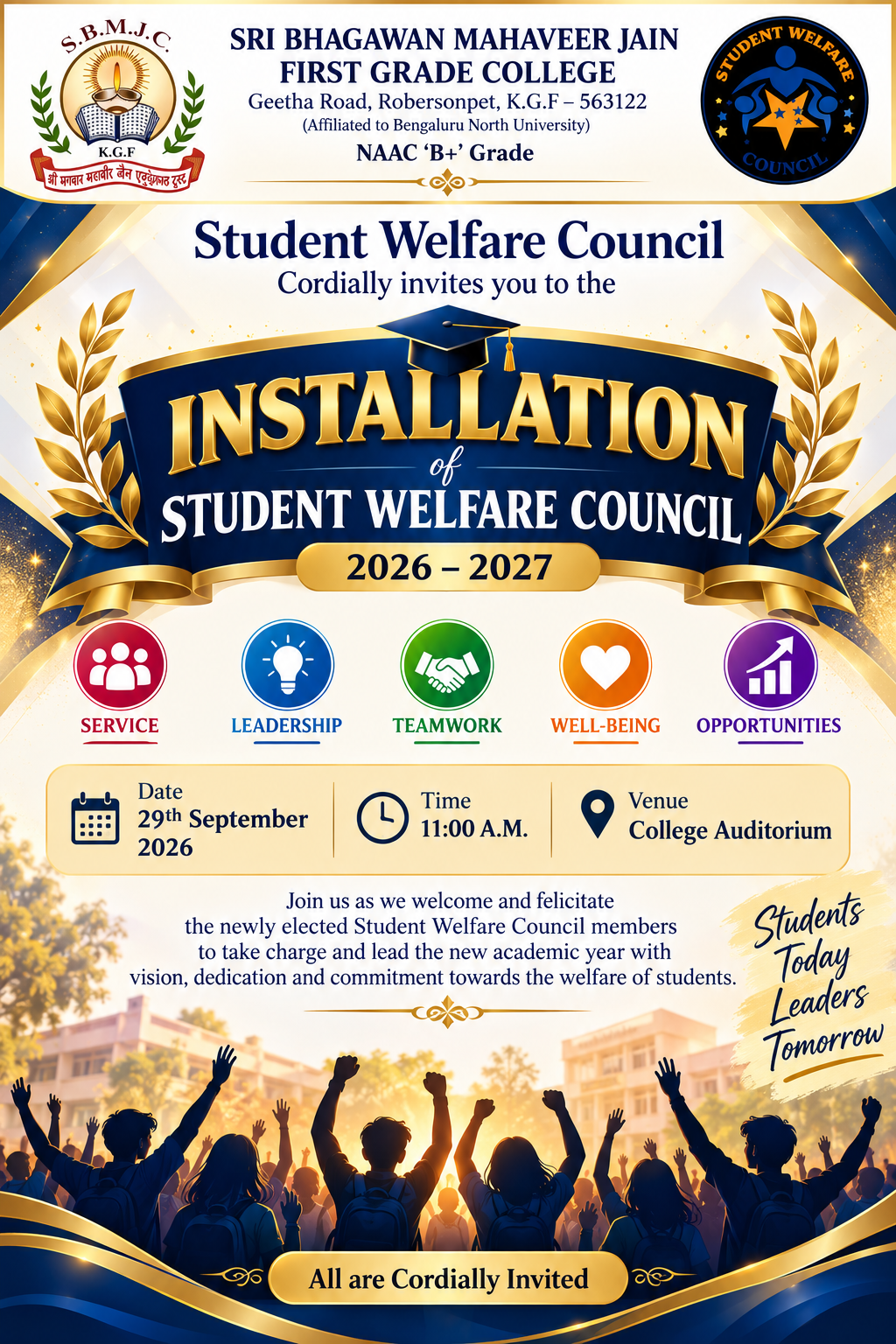
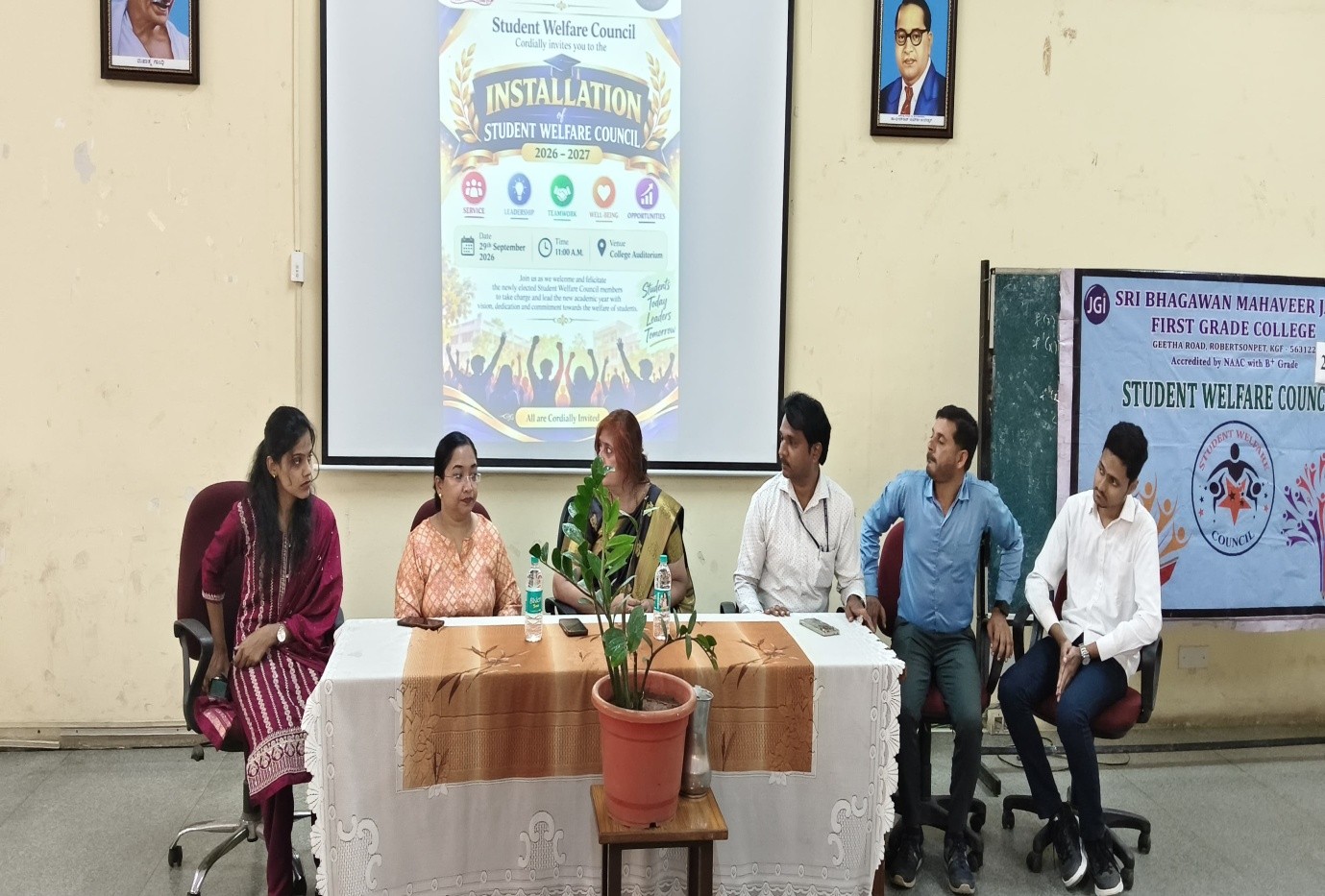
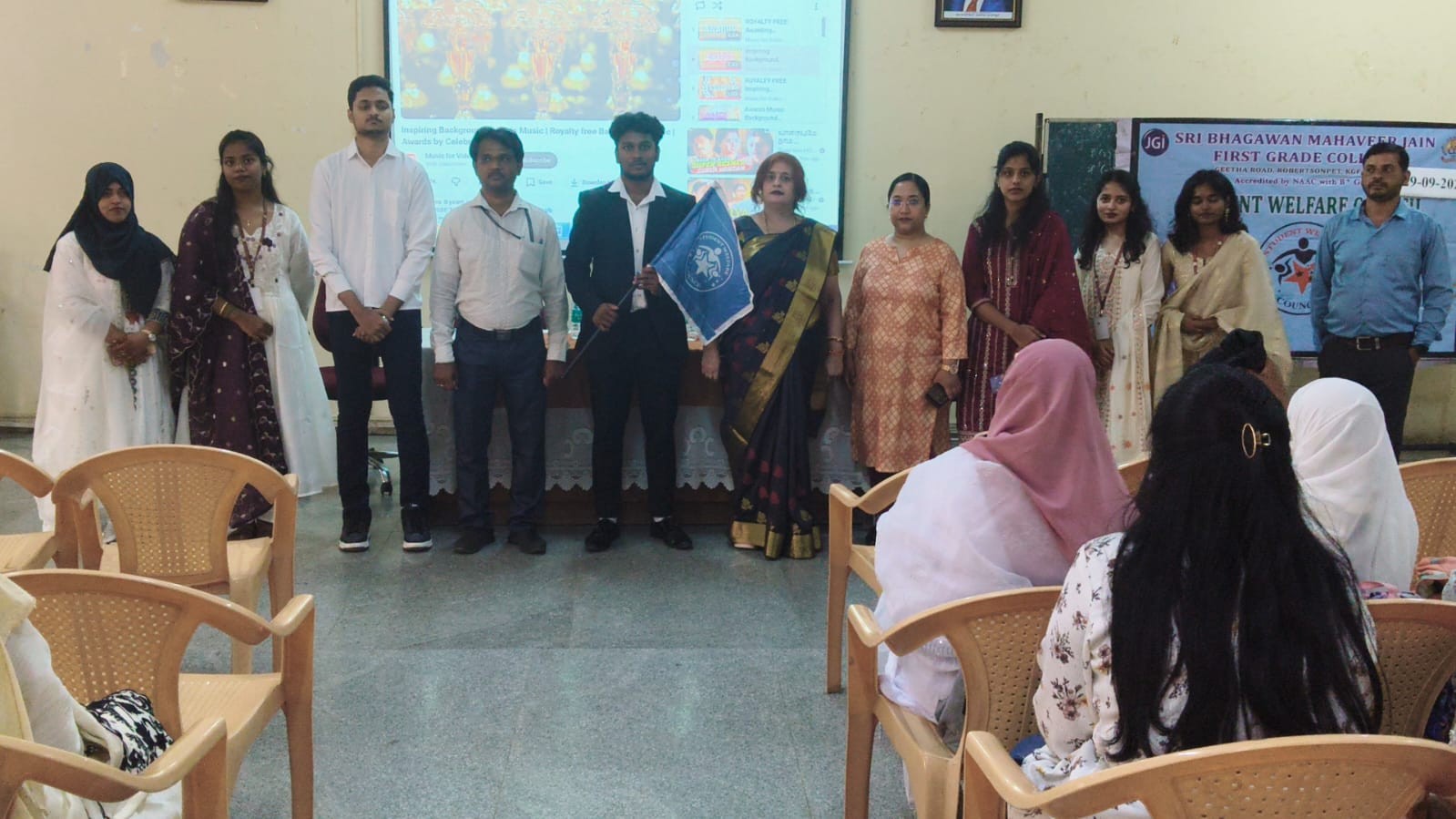
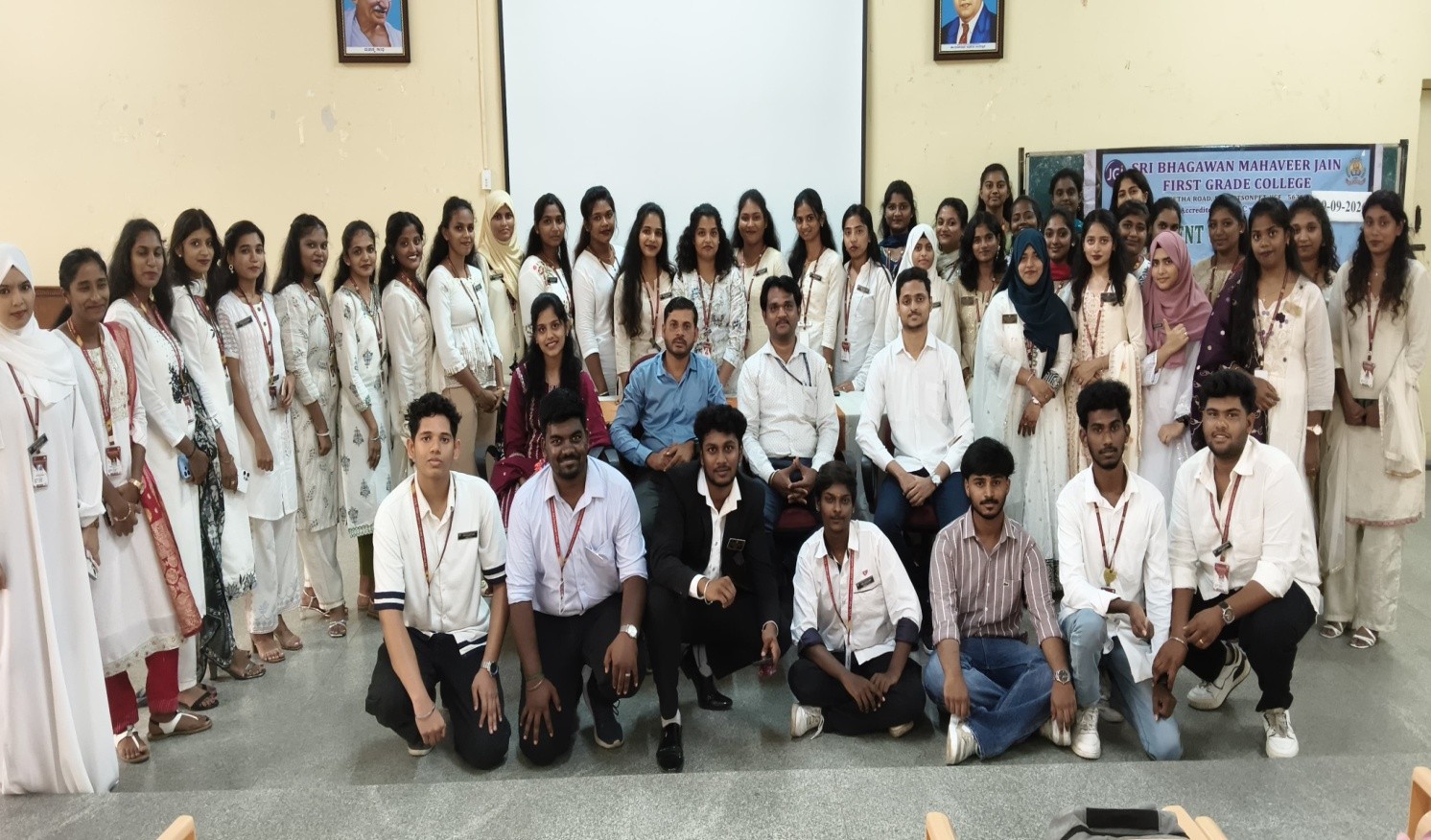
Introduction: The Student Welfare Council (SWC) Installation was conducted on the 29th of September , 2026, in the Auditorium. The event, organized by Mr. Praveen N ,SWC Officer and Mr. Changa Reddy SWC, Coordinator marked the formal installation of newly elected SWC members and office bearers (BOD’S), continuing the legacy of student leadership and welfare initiatives..
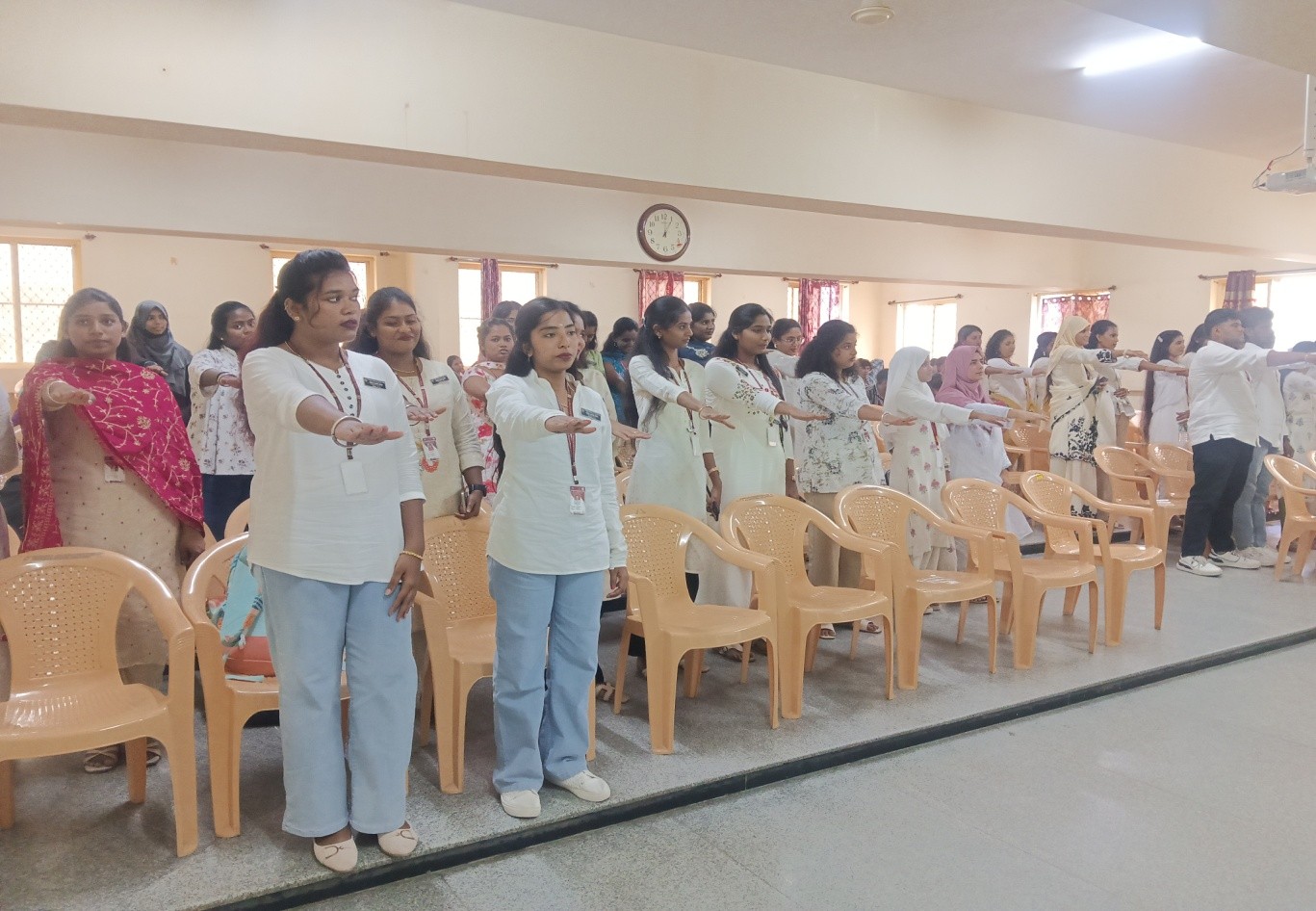
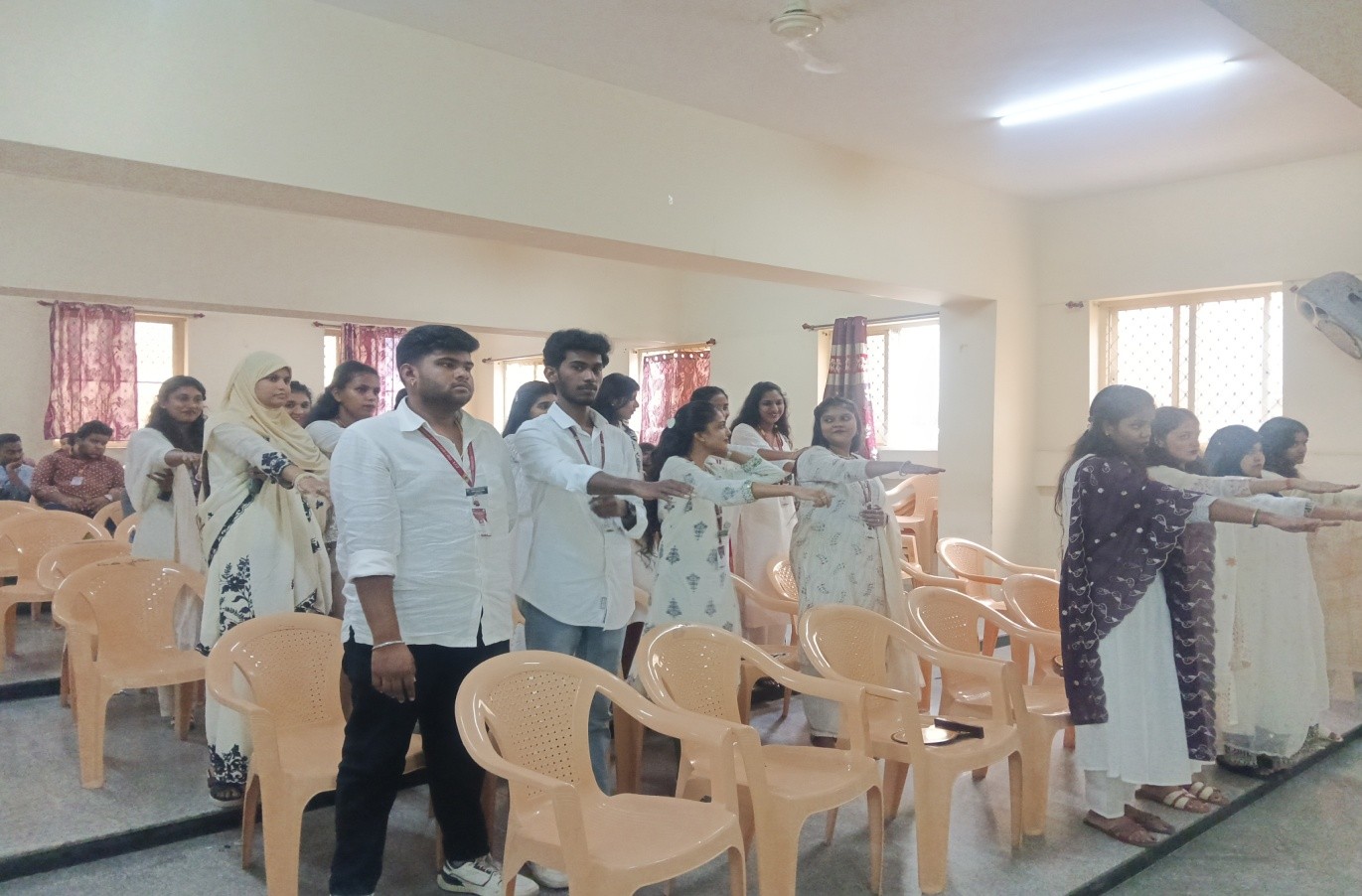
Event Proceedings: The event commenced with warm Welcome Address by Ms. Sakeena. A symbolic act of watering a plant was performed by the guests to signify growth and sustainability, followed by a march by all SWC members, demonstrating unity and commitment. Dr.Rekha Sethi, Principal delivered an inspiring speech on student leadership, followed by speech from Mrs. Rashmi, Administration Department SBMJFGC-KGF, Mr. Md Younus, former SWC , President 2022-2023, and Ms. Abhinaya, former SWC , BOD 2025-2026. The newly elected members were then formally badged, followed by the oath-taking ceremony led by the Mr. Md Younus. Vote of Thanks by Mr. Nanda kumar, Member of SWC , acknowledging the contributions of all attendees and organizers.
Conclusion: The SWC Installation Ceremony was a well-organized and meaningful event that highlighted the significance of student leadership, responsibility, and teamwork. It served as an inspiration for the newly elected members to uphold the values and duties of SWC, ensuring continued student welfare and engagement in institutional activities. The enthusiastic participation and positive atmosphere made the event a memorable and impactful experience for everyone involved.
LIST OF NEW STUDENT WELFARE COUNCIL (SWC) MEMBERS -2025-2026
SRI BHAGAWAN MAHAVEER JAIN FIRST GRADE COLLEGE, KGF
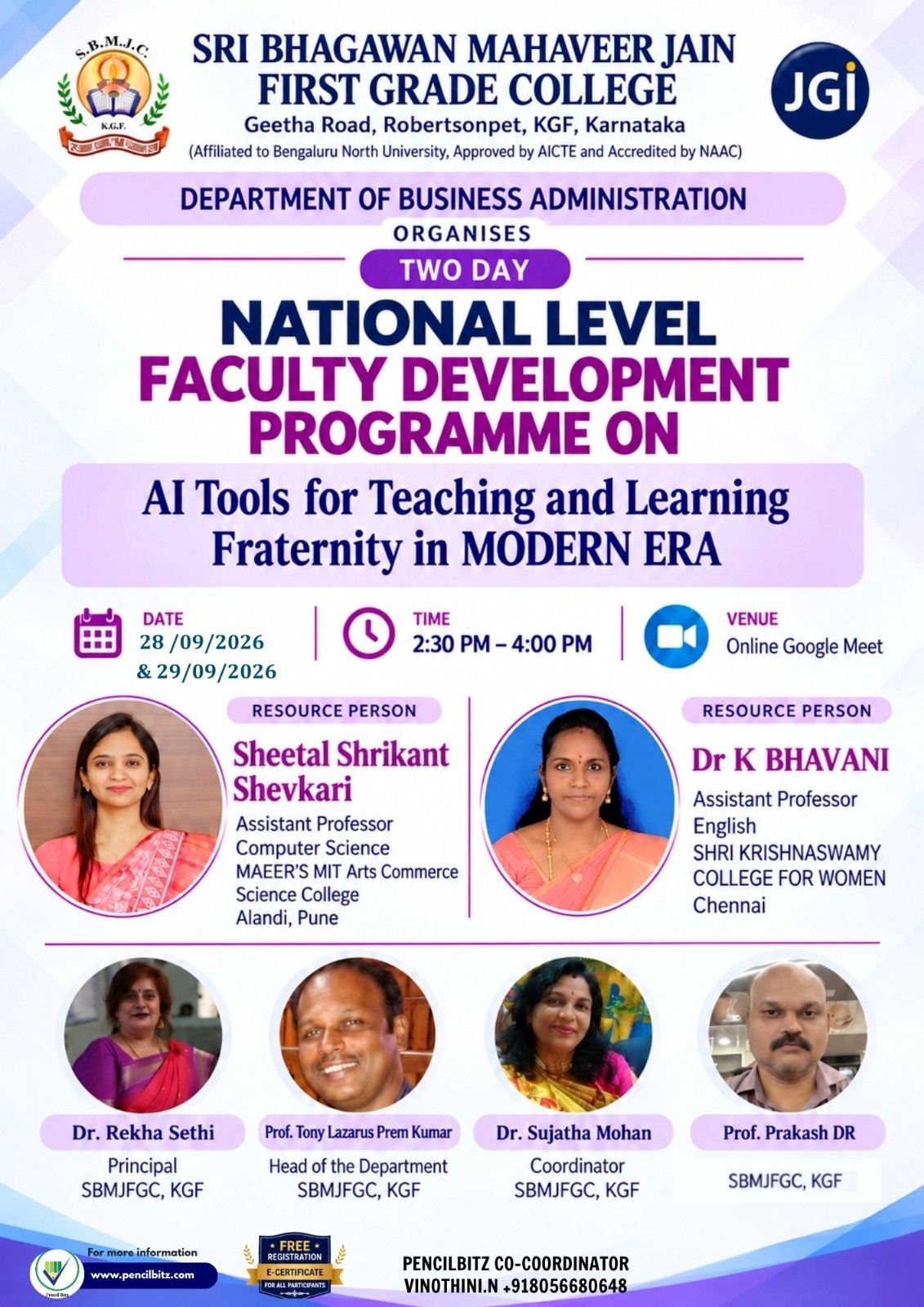
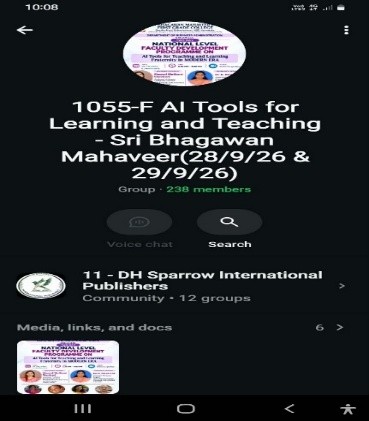
Title of the Programme: Two-Day National Level Faculty Development Programme on “AI Tools for Teaching and Learning Fraternity in Modern Era”
Date: 28th and 29th September 2026 Time: 2:30 PM to 4:00 PM Mode: Online – Google Meet
Introduction
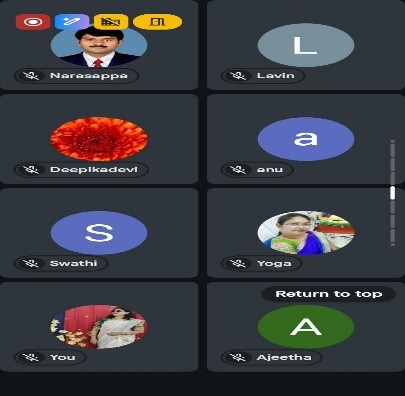
The Department of Business Administration, Sri Bhagawan Mahaveer Jain First Grade College, KGF, organized a Two-Day National Level Faculty Development Programme (FDP) on “AI Tools for Teaching and Learning Fraternity in Modern Era” on 28th and 29th September 2026. The programme was conducted online through Google Meet.
The FDP was organized with the objective of creating awareness among faculty members about the growing role of Artificial Intelligence (AI) in teaching and learning. The programme focused on the relevance of modern AI tools in education and their potential to support teachers in preparing learning materials, improving classroom engagement, and creating an effective teaching-learning environment.
OBJECTIVES OF THE PROGRAMME
The major objectives of the Faculty Development Programme were:
To create awareness about the emerging role of Artificial Intelligence in education.
To introduce faculty members to useful AI tools for teaching and learning.
To understand how AI can support teachers in preparing educational content.
To encourage the effective use of technology in the teaching-learning process.
To develop digital competencies among faculty members.
To discuss the changing role of educators in the modern technological environment.
To promote innovative and technology-supported teaching practices.
Resource Persons: The programme featured eminent resource persons from different academic institutions.
1. Ms. Sheetal Shrikant Shevkari
Assistant Professor, Computer Science MAEER’s MIT Arts Commerce Science College, Alandi, Pune.
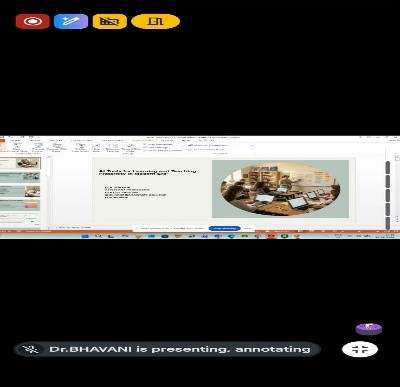
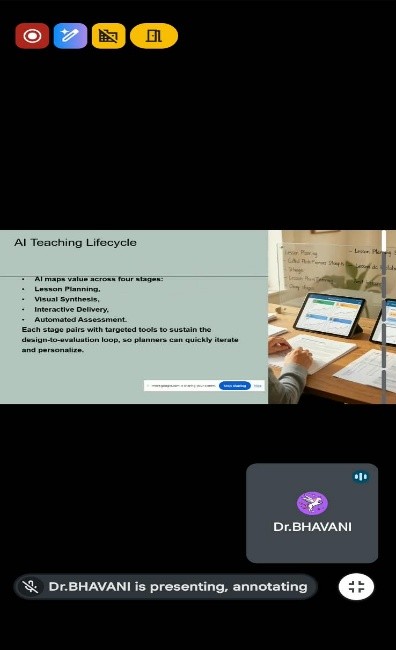
The core model she explained was AI maps value across four stages
Lesson planning
Visual synthesis
Interactive delivery
Automated assessment
Each stages pairs with targeted tools to sustain the design to evaluation loop, so planners can quickly literate and personalize.
2. Dr. K. Bhavani
Assistant Professor, English Shri Krishnaswamy College for Women, Chennai.
The resource persons shared their academic knowledge and insights regarding the application of AI tools in education and their relevance to contemporary teaching and learning practices.
Organizing Team
The programme was conducted under the guidance and coordination of the Department of Business Administration.
Dr. Rekha Sethi – Principal, SBMJFGC, KGF
Prof. Tony Lazarus Prem Kumar – Head of the Department, SBMJFGC, KGF
Dr. Sujatha Mohan – Coordinator, SBMJFGC, KGF
Prof. Prakash DR – SBMJFGC, KGF
Ms. Vinothini N. – PENICBILITZ Co-Coordinator
Programme Proceedings
The two-day FDP provided a platform for faculty members to gain an understanding of the growing significance of Artificial Intelligence in the academic environment.
The sessions highlighted how AI-based tools can be incorporated into different stages of the teaching-learning process. Faculty members were encouraged to explore technology-based approaches for preparing teaching resources, improving student engagement and supporting innovative classroom practices.
The interaction with the resource persons also helped participants understand the changing educational landscape and the importance of developing digital skills among teachers. The programme emphasized that AI tools can serve as supportive resources for educators when they are used appropriately and responsibly.
Key Learning Outcomes
The FDP helped participants to:
Understand the basic applications of AI in education.
Become familiar with the importance of AI-assisted teaching tools.
Explore innovative approaches to content preparation and classroom teaching.
Recognize the importance of digital skills for modern educators.
Understand the changing nature of teaching and learning in the AI era.
Consider ways of integrating technology into academic practices.
Develop greater awareness of responsible and effective use of AI tools.
Conclusion
The Two-Day National Level Faculty Development Programme on “AI Tools for Teaching and Learning Fraternity in Modern Era” was an academically enriching initiative organized by the Department of Business Administration, Sri Bhagawan Mahaveer Jain First Grade College, KGF.
The programme provided faculty members with an opportunity to learn about the growing relevance of Artificial Intelligence in education and to reflect on innovative ways of enhancing the teaching-learning process. The participation of resource persons from Pune and Chennai added an academic and national-level dimension to the programme.
The FDP successfully highlighted the importance of embracing appropriate technological advancements while strengthening the role of educators in the modern academic environment. The programme concluded as a valuable learning experience for the participating faculty members.
Particulars
Details
Institution
: Sri Bhagawan Mahaveer Jain First Grade College, KGF
Department
: Department of Business Administration
Programme
: Two-Day National Level Faculty Development Programme
Theme
: AI Tools for Teaching and Learning Fraternity in Modern Era