Guest Lecture on “Her Protection And Wellness”

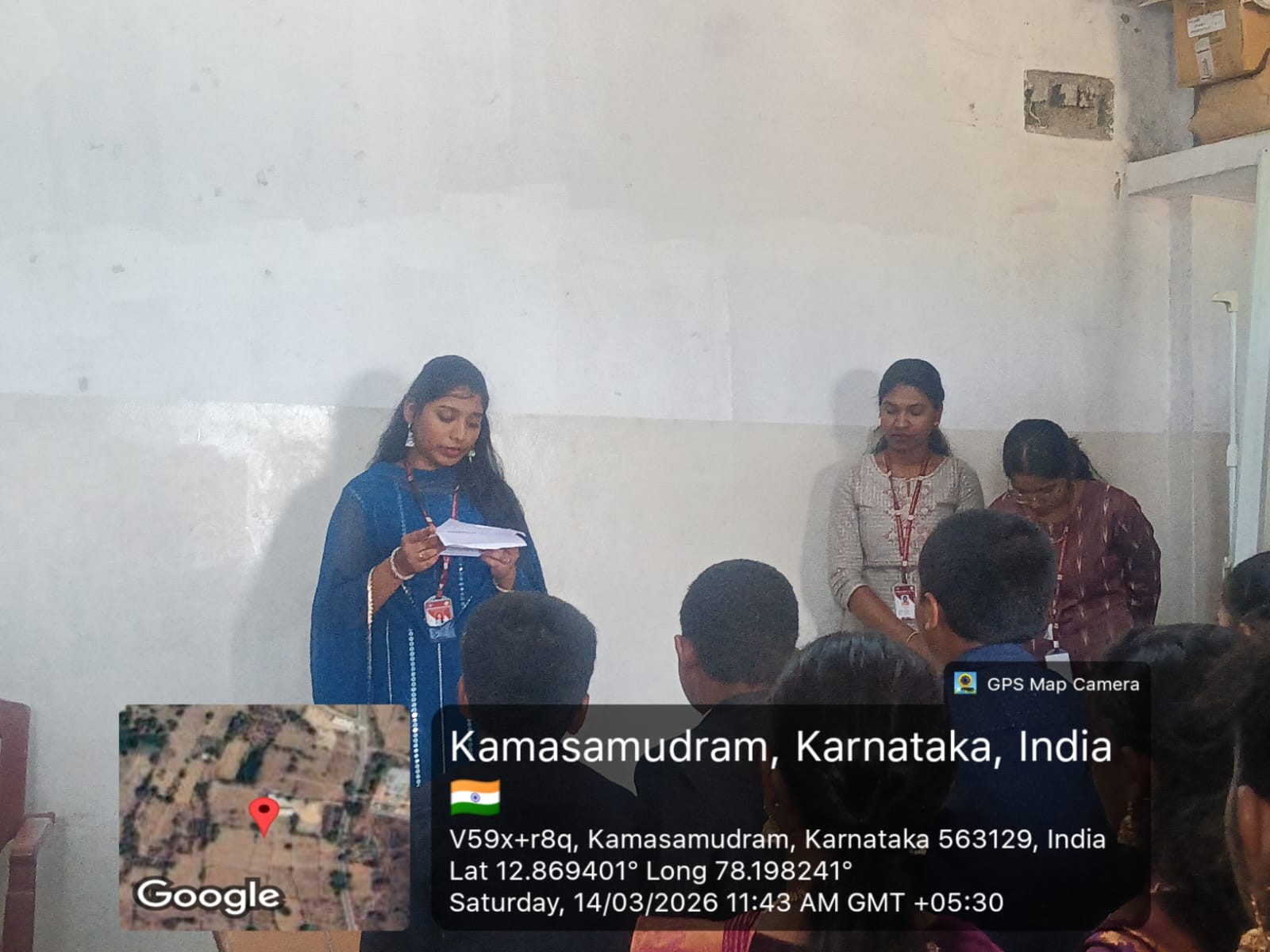
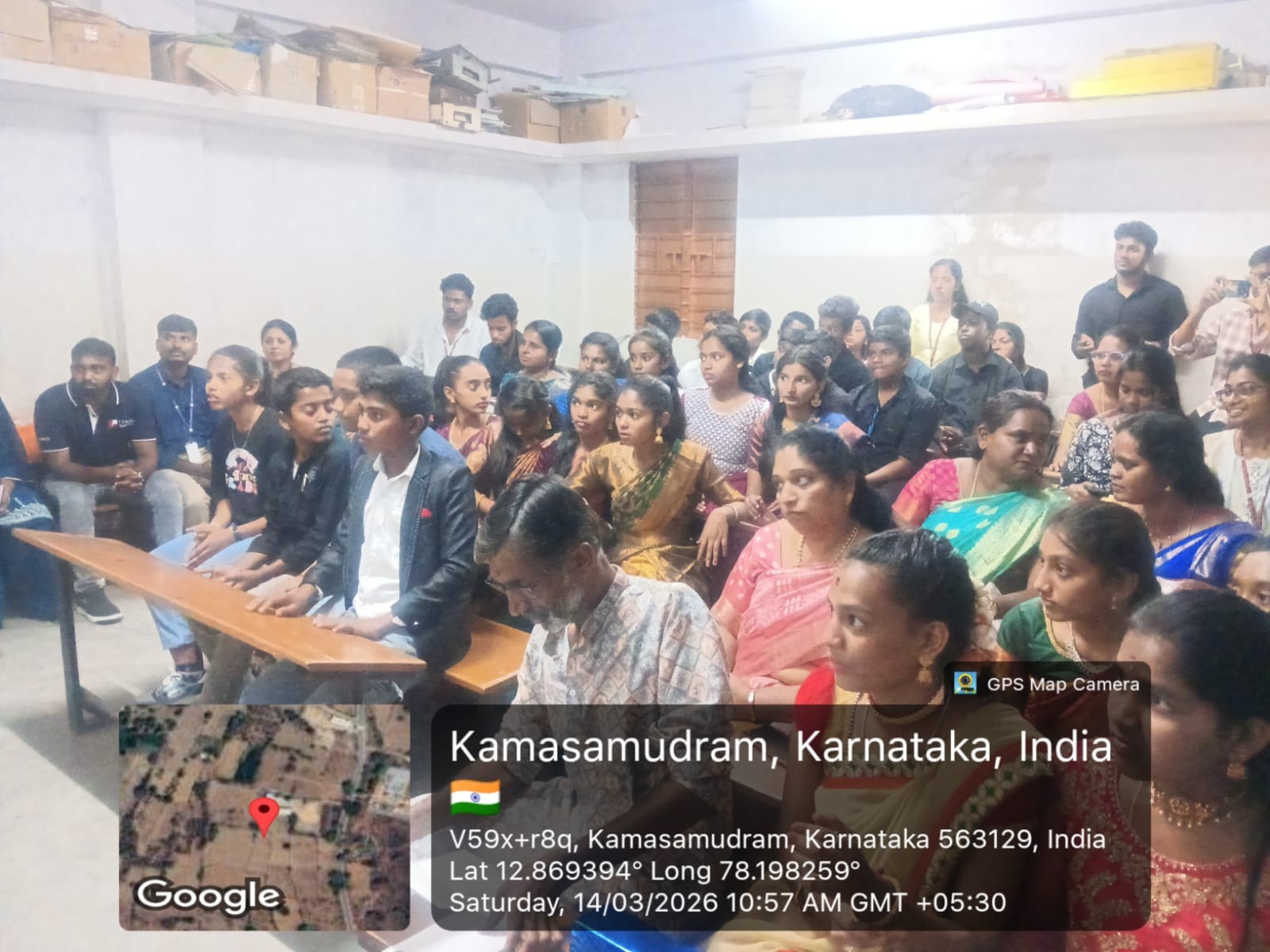
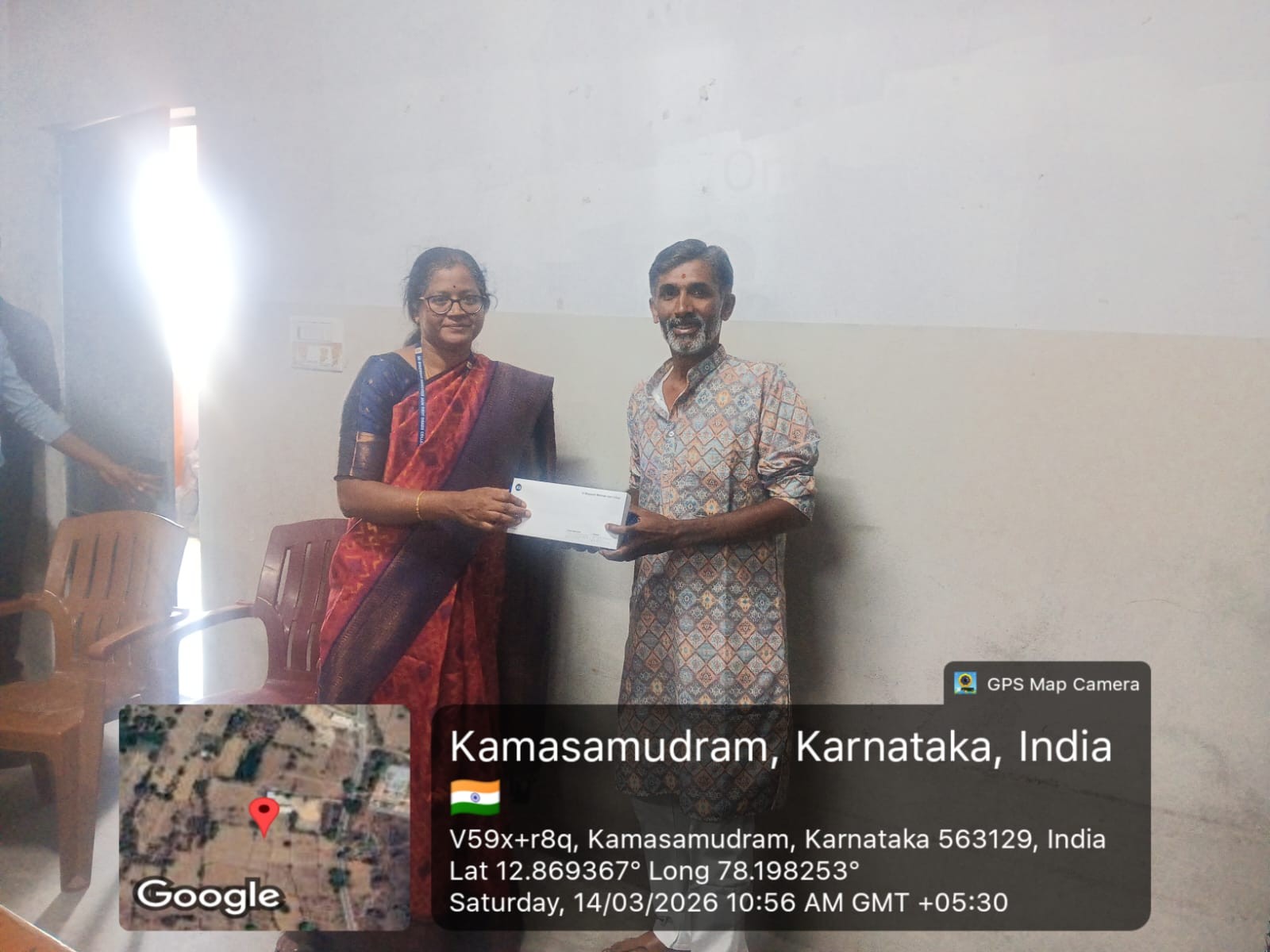
Anti-Sexual Harassment Cell organised a guest lecture on “Her Protection And Wellness” in conference hall on 25th November, 2025 at 10:00 am to 11:30 am.

The chief guest for the session was Dr. Rohini Muralidhar, Gynaecologist Gouthami Hospital KGF ,madam briefed the students about the fundamentals of physical, mental and social health. And created awareness on Breast cancer, Cervical cancer, prevention of early and unwanted pregnancies and the insights like measures, remedies to overcome health issues and to lead a healthy life were specified.

Program outcomes: followed by which students also updated with the existing norms of Anti Sexual Harassment, 100 students participated and were acknowledged with the rising issue which lacked awareness. The questionnaire session was useful as it helped students to clear their doubts on menstruation, PCO, discharge etc. The answers from Dr. Rohini madam gave clarity to the
students.

By organising this program, students were aware of the role, with the functioning of the ‘Anti-Sexual Harassment Cell’ in the institution.

KGF TALUK COURT VISIT

Date: 03/12/2025 Day: Wednesday Time: 10.30 am  to 1.30 pm

Event Organizer: Mr. Praveen N, SWC Officer, Mr. Changareddy, SWC coordinator ,Mr.Hemanth, Assistant Professor, Commerce Department,,Mrs.Kasturi L HOD, Commerce Department  
Venue: KGF TALUK COURT Participants: 59 Students.  

The Department of Commerce, Sri Bhagawan Mahaveer Jain First Grade College, Kolar Gold Fields (KGF), organized an educational court visit on 03rd December 2025 for the students of  I  Year B.Com. The visit aimed to provide practical exposure and insight into the functioning of the judicial system in India, as a part of the academic curriculum.

A total of 59  students, accompanied by 3 faculty members, visited the KGF TALUK COURT .The visit was planned to enhance the students to understanding of legal procedures, courtroom etiquette, and the various stages of trial proceedings.

During the visit, students had the opportunity to witness live court sessions including both civil and criminal cases. They observed how arguments are presented by advocates, how the judge manages court proceedings, and how verdicts are pronounced.  The students found the experience highly enriching as it bridged the gap between theoretical knowledge and real-life

practice. The visit sparked meaningful discussions among the students about the importance of the legal system and its impact on commerce and business practices.

The Department of Commerce extends its gratitude to the court authorities for allowing the visit and to the college management for their support in organizing the event.

Department of Computer science Conducted IOT Workshop for final Year BCA & BSc Computer Science Students

The Department of Computer science Conducted IOT Workshop for final Year BCA & BSc Computer Science Students

On: 29/11/2025

Topic : Internet of Things (IOT) Workshop

Venue: Conference Hall SBMFGC-KGF

Resource Person : Mr. Lohith Kumar, Founder Of Ziony Technologies (Ziobotics) Bengaluru

Faculty In-charge :

Mr. Siddarama S, Associate Professor ,Department of computer Science, SBMFGC-KGF

Mr.Teekshith Kumar M, Assistant Professor , Department of Computer Science, SBMFGC-KGF

Mr. Dileep D , Assistant Professor , Department of Computer Science, SBMFGC-KGF

Total number of Student attended: 150

Objective of the Workshop


  1. Enhances Technical Skills
    Students get hands-on experience with sensors, microcontrollers, and real-time data handling.
  2. Bridges Theory and Practical Knowledge
    Concepts learned in class (networking, embedded systems, programming) are applied in real-world scenarios.
  3. Introduces Emerging Technologies
    IoT is a rapidly growing field; workshops help students stay updated with current industry trends.
  4. Boosts Problem-Solving Ability
    Learners design small IoT models, helping them develop analytical and logical thinking.
  5. Encourages Innovation and Creativity
    Students build unique IoT solutions such as smart home models, automation systems, etc.
  6. Improves Career Opportunities
    IoT skills are in high demand across industries like healthcare, agriculture, manufacturing, and smart cities.
  7. Hands-On Project Development
    Participants build mini projects that can be showcased in portfolios, competitions, and internships.
  8. Promotes Teamwork and Collaboration
    Group-based IoT tasks help enhance communication and team coordination skills.
  9. Supports Industry-Academia Connection
    Workshops often include expert sessions that expose students to real industry challenges.
  10. Motivates Students Towards Research
    IoT opens paths for research in automation, AI integration, data analytics, and sensor networks.
1. Agriculture Drone 2. Octagonal Walking Robot 3.Obstacle avoiding Car

4. Vacuum car 5. Sensor Following Car
  1. Agriculture Drone:
    An agriculture drone is an IoT-enabled device used to monitor crops, spray fertilizers, and detect plant health using sensors and cameras. It collects real-time data on soil moisture, crop growth, and pest infestations, helping farmers make data-driven decisions. These drones can be controlled remotely and automate farming tasks, improving efficiency and yield.
  2. Octagonal Walking Robot:
    An octagonal walking robot is a multi-legged robot designed for terrain navigation, equipped with sensors for obstacle detection and balance. Using IoT connectivity, it can be remotely monitored and controlled for exploration, surveillance, or rescue operations. Its design allows stable movement over uneven surfaces where wheeled robots may fail.
  3. Vacuum Car:
    A vacuum car is an automated IoT device that cleans surfaces using suction, similar to robotic vacuum cleaners. It can detect dirt, map the cleaning area, and avoid obstacles using sensors. Users can monitor and control it via smartphones or cloud applications, enabling efficient cleaning without manual intervention.
  4. Sensor Following Car:
    A sensor-following car is a small robotic vehicle that uses sensors like IR or ultrasonic modules to follow a pre-defined path. IoT integration allows remote monitoring, data logging, and route adjustments in real time. It’s commonly used in educational projects to teach automation and robotics concepts.
  5. Obstacle Avoidance Car:
    An obstacle avoidance car is a robotic vehicle that navigates autonomously by detecting and avoiding obstacles using ultrasonic, infrared, or LIDAR sensors. IoT connectivity enables real-time tracking, route planning, and data collection for further analysis. It’s useful for smart transportation and autonomous navigation research.

Outcome of the Workshop :

  1. Understanding of IoT Basics: Participants will gain a clear understanding of IoT concepts, architecture, and real-world applications.
  2. Familiarity with IoT Components: Attendees will be able to identify and describe components like sensors, actuators, microcontrollers, and communication modules.
  3. Hands-on Experience: Participants will get practical exposure to connecting and programming IoT devices.
  4. Sensor Integration Knowledge: Learners will understand how sensors collect data and how it is transmitted for processing.
  5. Application Awareness: Attendees will know how IoT can be applied in areas like agriculture, smart homes, healthcare, and transportation.
  6. Problem-Solving Skills: Participants will learn to design simple IoT solutions to solve real-world problems.
  7. Data Interpretation Skills: Attendees will understand how to interpret sensor data and make decisions based on it.
  8. IoT Project Preparation: Learners will be better prepared to start small IoT projects individually or in teams.
  9. Networking and Collaboration: Participants can collaborate and share ideas on innovative IoT applications.
  10. Motivation for Advanced Learning: The workshop will inspire further exploration of IoT technologies, programming, and related research areas.

WORKSHOP ON COMPETITIVE EXAMS & CAREER GUIDANCE

Event : “WORKSHOP ON COMPETITIVE EXAMS & CAREER GUIDANCE”

Date: 02/12/2025 Day: Tuesday Time: 10.30 am  to 1.30 pm

Event Organizer: Mr. Praveen N, SWC Officer, Mr. Changareddy, SWC coordinator

Resource person:

1. Prof . A Narayana Prasad State Nodal Officer & Placement Cell Officer, Bengaluru North University 

2. Mr.Prashanth Srinivas, Co-Founder and Directors INDIA 4 IAS

Venue:  Conference hall

Participants: 223 Students.

INTRODUCTION

A Free Workshop on Competitive Exams and Career Guidance was organized by the Student Welfare Council (SWC) of Sri Bhagawan Mahaveer Jain First Grade College (SBMFGC), KGF on 2nd December 2025. The event was held in the Conference Hall of the college from 10:30 AM to 1:30 PM.

The workshop aimed to create awareness among students regarding various competitive examinations and to provide career guidance for better future planning. The session was open to all final-year and pre-final-year students, and students from other colleges were also allowed to participate.

INAUGURATION AND WELCOME:

The event began with a warm welcome by the SWC students delivered the inaugural address.

RESOURCE PERSONS:

1. Prof. A. Narayana Prasad , Retired State Nodal Officer, Placement Cell & Consultant Coordinator, Bengaluru North University. He provided insights into government and non-government competitive examinations.

2. Prashanth Srinivas ,Co-Founder and Director, India4IAS. He explained UPSC, KPSC, and other national-level exams.

3. Dr. L Jayapandian ,IQAC Officer, SBMFGC. He guided students on career options strategies.

WORKSHOP HIGHLIGHTS:

  • Guidance on UPSC, KPSC, banking exams, SSC, railways, and more.
  • Motivational session on career development and skill building.
  • Interactive Q&A session.
  • Tips on exam pattern, study materials, and preparation methods.

PARTICIPATION AND CERTIFICATION:

The workshop saw active participation from students of SBMFGC and nearby colleges. Free registration was offered, and e-certificates were provided to all attendees.

CONCLUSION:

The workshop was informative and beneficial for students aspiring to pursue competitive examinations. The efforts of the Student Welfare Council, resource persons, and organizers were highly appreciated. The session concluded with a vote of thanks.

Department of Computer Science Organized IT Logo Computation

The Department of Computer Science Organized BCA & BSc Computer Science Students IT Logo Design Computation

on : 28th September 2025

Place : Open Auditorium

Total Number of Student Participants : 64

Faculty Co Ordinator :

Ms. Sushma S, Assistant Professor ,SBMJFGC, KGF

Ms. Chitra S, Assistant Professor ,SBMJFGC, KGF

Mr. Ravi Kumar P, Assistant Professor ,SBMJFGC, KGF

Event judge :

Mr. Muniraju DK , Assistant Professor , SBMJFGC, KGF

Event Outcomes:


  1. Enhanced Creativity: Students expressed computer science concepts through colorful rangoli designs, blending technical ideas with artistic representation.
  2. Better Understanding of Logos: Participants gained a deeper understanding of various IT company logos, their symbolism, and branding elements.
  3. Improved Observation Skills: Students learned to study shapes, symmetry, and patterns in logos and accurately recreate them using rangoli.
  4. Team Collaboration: The activity encouraged teamwork as groups shared responsibilities, planned designs, and executed them together.
  5. Hands-on Learning Experience: Learners experienced a practical and engaging method to understand digital branding through a traditional art form.
  6. Cultural Integration: The event beautifully connected modern technology themes with Indian cultural art, promoting inclusivity and tradition.
  7. Boosted Presentation Skills: Students improved their ability to explain the meaning, design choices, and relevance of each logo during the display.
  8. Problem-Solving Ability: Participants developed quick-thinking skills to manage colours, proportions, and corrections while creating intricate designs.
  9. Increased Interest in Design: The activity encouraged many students to explore graphic design concepts such as colour psychology, typography, and layout.
  10. Event-Based Learning: The competition fostered a sense of healthy competition, motivating students to put forward their best creative and technical ideas.